
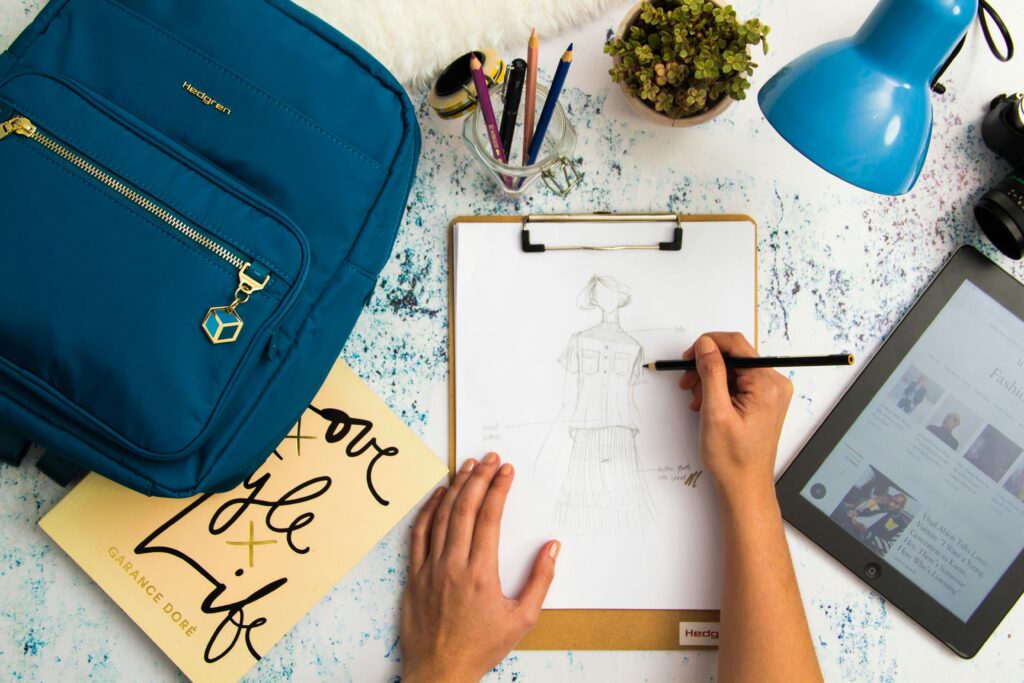
Has it ever crossed your mind to start a clothing line, create a trend or even have your designs shown on the runway? Many creative minds dream of becoming a fashion designer. However, turning that dream into a lucrative career requires the right dosage of passion, knowledge, and strategy.
In this guide, we will take you through everything you need to know about how to be a fashion designer – from the basics of design to creating your brand.
1. Understand What a Fashion Designer Really Does
Before embarking on this career, you should have some insight into what being a fashion designer really entails.
Fashion designers develop their own original clothing, accessories, or footwear. They also research fashion trends, develop sketches of designs, choose the fabrics and materials, and supervise the creation and production of the product. Some fashion designers work in haute couture or luxury fashion and some work in retail or streetwear fashion.
As a fashion designer, the job isn’t just about creativity; it includes researching, marketing, and business strategy. To be successful, you need both creative talent and an entrepreneurial mindset.
2. Develop a Passion for Fashion
If you are curious about how to become a fashion designer, the first step is easy: love fashion!
Pay attention to what people are wearing, keep your eyes on trends, and then also read and learn about fashion history. Watch runway shows from top designers, vacation in museum costume collections, or read a fashion magazine such as Vogue, Harper’s Bazaar, or Elle.
If you truly love fashion, your passion will push you through the challenges of this competitive profession.
3. Learn the Basics of Fashion Design
You can’t create a garment without being knowledgeable in the fundamentals. Here are the fundamental skills that every aspiring fashion designer should have a command over:
Sketching and Drawing: Become comfortable putting your ideas on paper. You can practice these skills by sketching a garment from a magazine or an online fashion image.
Understanding Fabrics and Textiles: You should know how everything works, similar to a chef understanding ingredients—the texture, how it drapes, how much it stretches, and how it reacts with stitching.
Sewing and Pattern Making: You need to know how to sew and how to make a garment. The more you understand how a garment is made, the better you can design it.
Color Theory and Fashion Illustration: You need to have the ability to combine colors and visualize outfits.
Computer-Aided Design (CAD): Most designers today are using programs such as Adobe Illustrator or CLO 3D, to render their fashion designs digitally.
You can find many online course and platforms designed to develop these essential skills at a reasonable price point, such as Coursera, Skillshare, and Udemy.
4. Get a Formal Education in Fashion Design (Optional but Helpful)
Your education is not required, but formal education can be of help. Enrolling in a fashion design program will allow you to develop technical skills, gain exposure to the fashion industry, and network with professionals.
Some of the top fashion schools in the world are as follows:
1.Parsons School of Design (USA)
2.Central Saint Martins (UK)
3.Fashion Institute of Technology (FIT), New York
4.NIFT (India)
5.Istituto Marangoni (Italy)
Through your time in school, you will be working on design projects, creating a portfolio, and have a chance to delve into fashion marketing and fashion business—these will be great assets to your career
5. Build Your Portfolio
As a designer, your fashion portfolio is your calling card. It highlights your best work and can include sketches, finished clothes, photographs, and the creative process.
Tips for constructing a great portfolio:
1.Include sketches that are both hand-drawn and in a digital format.
2.Demonstrate your understanding of fabrics, colors, and design themes.
3.Show a degree of flexibility—casual wear, formal wear, or experimental or quirky designs. Be the Jack of all trades, not just one thing.
4.Change your portfolio as your taste develop over time. Many successful fashion designers are continually changing their portfolio.
A solid portfolio can lead to internships, and jobs, and even investors for your future brand.
6. Gain Practical Experience Through Internships
If you are dedicated to becoming a fashion designer, you will need to gain some real-world experience.
It is a good idea to intern for established designers, brands, or fashion houses. Interning can help you in terms of exposure to and understanding of how the industry actually operates, for example, with production lead times and how to deal with clients.
Sometimes, internships can also be a good guide to how to work as part of a team, manage communications, and handle an ever-changing, high-paced environment common in the fashion industry. Internships do not just bolster your résumé but create additional contacts moving forward in your professional life.
7. Learn the Business Side of Fashion
Fashion is not simply about creativity, but is also a business. While many talented designers find themselves unsuccessful, it is often because they do not think about commercializing their work.
Here are some topics you should know:
1.Branding: Develop a signature style or identity that establishes your label.
2.Marketing: Know how to promote your designs through social networks, fashion shows, and influencers.
3.Pricing and Production: Learn how to price your garments and deal with manufacturing costs.
4.Retail and E-Commerce: Investigate how to sell your designs online and in stores.
Even if you are a designer, knowing some basic things about entrepreneurship will make you a more independent and successful designer in the long run.
8. Stay Updated With Fashion Trends
The world of fashion moves rapidly; what is currently in vogue may soon be obsolete.
In order to stay fresh and relevant, follow trend forecasting websites such as WGSN or Trendstop, and observe global fashion weeks (Paris, Milan, London and New York).
In addition, social media sites such as Instagram, Pinterest, and TikTok are good ways to discover new fashion trends and insights into what consumers desire.
9. Create Your Own Fashion Brand
After honing in your skills and building confidence, you are ready to move to the next stage: to launch your fashion label. You can do this by:
1.Identifying your niche – casual, ethnic, street, sustainable or high-end couture;
2.Naming and branding – choose a name and logo that reflects your design sensibility;
3.Creating a micro-collection – a small well-designed collection will be perfect;
4.Establishing an online presence (social media) – to showcase your work use Instagram, Pinterest or create a website;
5.To collaborate with influencers or stylists – to gain exposure;
6.Selling online – through sites such as Etsy, Shopify or an e-commerce site;
Starting small and growing is the key to long-term success!
10. Network and Participate in Fashion Events
Networking is an immensely valuable asset in the toolbox of a designer. You should attend fashion events locally, nationally, and internationally, trade shows, and exhibitions in order to meet new designers and build your accesses and contacts in the industry.
Collaborate with photographers, stylists, and models so you can feature your work. Entering competitions is also a good way to get exposure and credibility in the fashion industry.
11. Keep Improving and Innovating
Becoming a designer doesn’t mean the learning stops. The best designers are always innovating—discovering new fabrics, methods of sustainability, and the latest in digital design tools.
Don’t be afraid to take creative risks. Fashion is always changing and if it wasn’t, there wouldn’t be fashion. Whether that be through disruptive cuts, fabrics made from plastics, or unexpected prints and patterns, your creativity and quirkiness will drive your craft.
12. Common Mistakes to Avoid
While you are excited to pursue a career as a fashion designer, be sure to steer clear of these bad traps:
1.Imitating trends without putting your own twist on them.
2.Forgetting who your audience is.
3.Mispricing your designs.
4.Not marketing yourself in the correct way.
5.Ignoring the quality of the materials and construction.
Recognizing these common pitfalls early on will save you time and money down the road.
Conclusion
Starting out as a fashion designer requires creativity, commitment, and a good grasp of both the art form and the business side.
If the desire to share your personality through clothing is in your heart, take action today: learn the basics of fashion, start your portfolio, and jump into the industry. By doing so, your diligent efforts and planning can catapult your passion into a profession.
However, remember how to be a fashion designer isn’t simply a process or a set of steps to follow; it’s your own journey into finding your voice as a designer in the fashion world.